

This post came originally from the weekly newsletter of Bethlehem Evangelical Lutheran Church, Indianapolis, IN.
Q. I’m wondering if you can give some examples from your practice or others’ for how to incorporate daily spiritual practices and what some meaningful practices might be. I’d like to pray the daily hours but feel like I’m cheating if I don’t do it “on the hour” or miss some (other than the ones I’m asleep for, of course). Are there specific Lutheran daily hours books/guides?
Like any practice or habit, picking up new spiritual practices can be difficult. They are appropriately called practices because learning to use them is a lifelong journey.
Many of us grew up with some sort of spiritual practice at home, and many of us lost them over time. My family prayed before dinner every day when I was a little kid, but as we got older and life got busier, we weren’t always eating together as a family and the practice died out. This was the extent of my spiritual practices at home growing up. So I had to learn a few later in life, too.
Prayer
By far the most popular Christian spiritual practice is prayer–pray, pray, pray! Every other spiritual practice comes down to, or includes, prayer. Prayer is our lifeline, our way of directly communicating with God. Prayer doesn’t have to use specific words or phrases, and there is no right or wrong way to pray. That can be daunting for people (myself included), so throughout history Christians have composed written prayers to aid them in expressing themselves to God.
If you need an easy way to formulate any prayer, here’s one method:
- First, ADDRESS God. “Dear God” is perfectly acceptable and common.
- Then, PRAISE God. It can be as simple as “Thank you for bringing me safely through the night.”
- Next, REQUEST something from God. “Please keep me safe”, for example. I was once (accidentally) taught that there were appropriate and inappropriate things to ask God, but that is not true. You can ask God anything. Go ahead and read through the Psalms. You’ll find prayers that are angry rants at God, you’ll find prayers demanding that God “show up”, you’ll find prayers expressing deep grief and trauma in words and ways we might find uncomfortable (Psalm 137 comes to mind), but which reflect the agonizing pain of the psalmist. Nothing is off-limits when talking with God. God is big enough to handle whatever you dish out.
- After, END the prayer. A popular way to do this is to say, “In Jesus’s name”, or “I pray all this in the name of Christ.” You don’t have to do this, but it signals to yourself that you’re wrapping it up.
- Finally, say AMEN. Amen means “let this be so” or “this is most certainly true”, or “I trust this”. The word has ended Jewish, Christian, and Islam for millennia.
Using this structure, you can pray something simple like:
“Dear God, thank you for bringing me safely through the night. Please keep me safe this day. In Jesus’s name. Amen.”
That’s it!
This type of prayer is called a collect, and once you get the formula down, you’ll recognize it everywhere. Our Prayers of the Day on Sunday morning are collects. So are the prayers after the Offering and after the Holy Communion. Even the Eucharistic Prayer said at the altar table is a long, expanded form of the collect prayer. If you can memorize this form of prayer, you’ll never have to worry about finding the “right” words.
Knowing to, and how to, pray is one thing. Remembering to pray is another thing entirely. One way the church dealt with this grew into the Daily Hours.
Daily Hours
History
The Daily Hours / Daily Office / Divine Office / Liturgy of the Hours developed out of Jewish and early Christian traditions of praying at multiple, specific times of day.
In the Hebrew Scriptures we read that Daniel prayed three times a day; Psalm 55 also speaks of praying three times a day. Other psalms speak of praying “at morning” and “at night”, and still others, like Psalm 119, recommend praying seven times a day. The Acts of the Apostles in the New Testament records apostles and members of the early church praying at different times during the day.
The earliest post-New Testament direction to pray at specific times is a document called the Didache, a first-century CE Christian teaching document that gives us an important look into how the earliest Christians organized the church, worshiped, and lived. The Didache instructs Christians to pray the Lord’s Prayer three times each day. Other writers encouraged Christians to pause for prayer in the morning, in the middle of the day (sometimes multiple times), and in the evening.
By the time of the anonymous third/fourth-century CE document Apostolic Tradition, purported to be written by Hippolytus of Rome, seven times for daily prayer are recorded: at waking up, 9:00 A.M., 12:00 P.M., 3:00 P.M., evening (sunset), at bedtime, and at midnight. Paul in his first letter to the Thessalonians said, “pray without ceasing”, and these times for prayer provided a way to do that. At this time, the prayer was assumed to be private and unstructured.
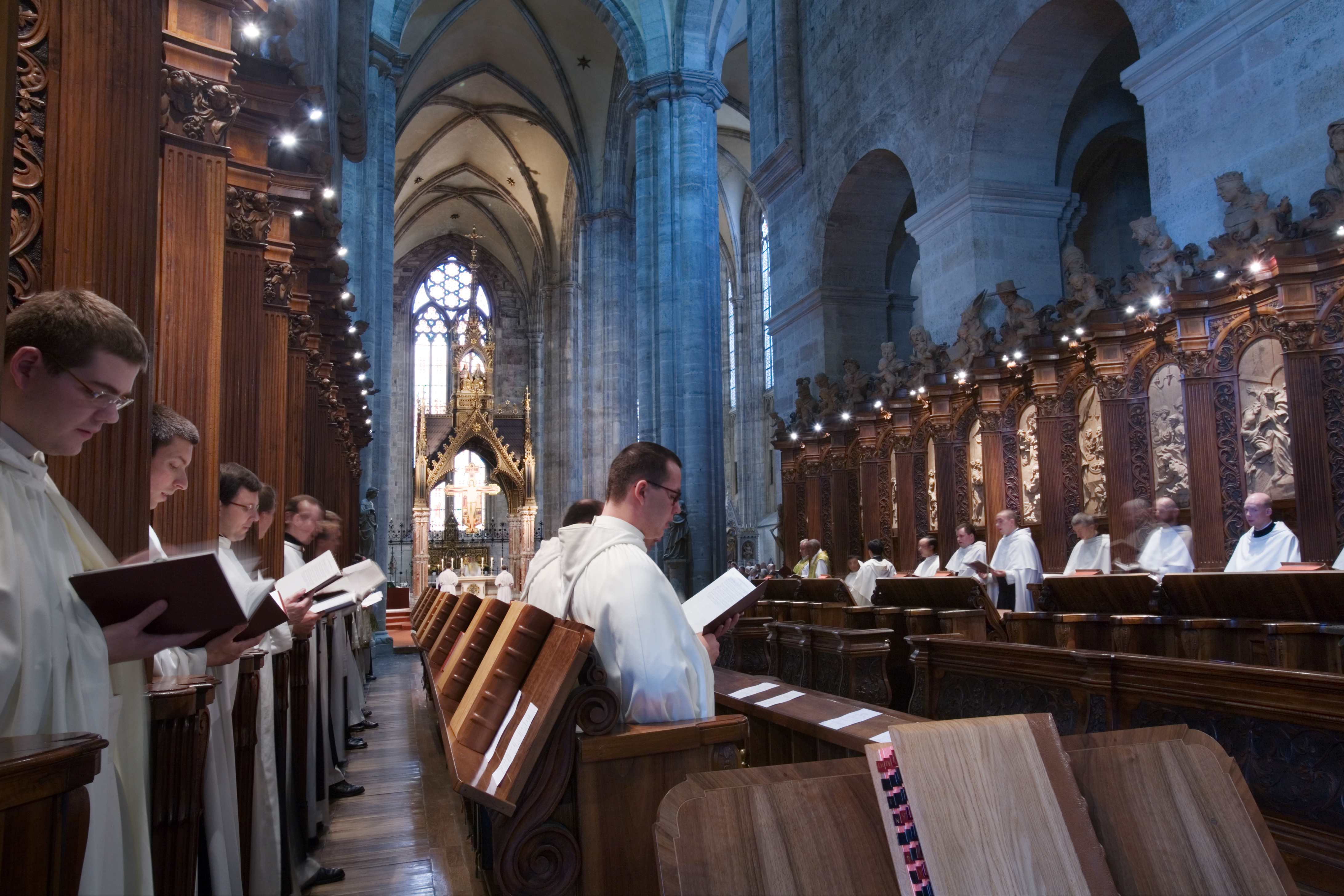
It was the monastics who took up this pattern and expanded it into the elaborate Daily Office that was known in the Middle Ages. In the rest of the church, public daily services of prayer in the morning and the evening were common. But in monasteries and convents, nine canonical hours were observed, some of which were long and complex:
- Vespers (sunset)
According to ancient tradition, the liturgical day begins at sunset; this is why Christmas Eve and the Vigil of Easter are counted as part of the following day. - Compline (bedtime)
- Vigils (middle of the night)
- Matins (before dawn)
- Lauds (at dawn)
- Prime (6:00 A.M.)
- Terce (9:00 A.M.)
- Sext (12:00 P.M.)
- None (3:00 P.M.)
All 150 Psalms would be prayed every week and the entire Bible would be read over the course of a year in these offices.
Obviously, such an intricate pattern was impossible for lay people outside of monasteries and convents to keep. Nevertheless, all Christians were encouraged to pause for prayer during the day, and church bells often rang at the canonical hours as a reminder. Morning and evening were still the principal times for prayer.
By the time of the Reformation, the canonical hours were so complex that they were almost exclusively prayed by clergy. Martin Luther wanted to restore daily offices of prayer for everyone’s use, and so reduced the canonical hours to the two most important ones–Morning Prayer (Matins) and Evening Prayer (Vespers). He encouraged their use in congregations, but they gradually fell out of use until their revival in schools, colleges, and seminaries in the nineteenth century. The offices of Morning and Evening Prayer reappeared in American Lutheran hymnals at the turn of the century and their use recommended, but they failed to gain traction in our congregations. Simply, we forgot to stop and pray, and never started again.
There’s been a more recent push to reclaim the Daily Office and encourage its intended use: to provide a structure for Christians to stop and pray at different times during the day so we can train ourselves again to “pray without ceasing” not only in school or at church, but in our everyday lives.
How to Pray the Daily Office
Praying the Daily Office is a practice I highly recommend. I’m not very good at it, but I try to pray at least one a day. I find the structure helps me focus on God, and I usually welcome the interruption to the hecticness of life.
If you want to get started with the Daily Office, here’s a few recommendations.
Evangelical Lutheran Worship
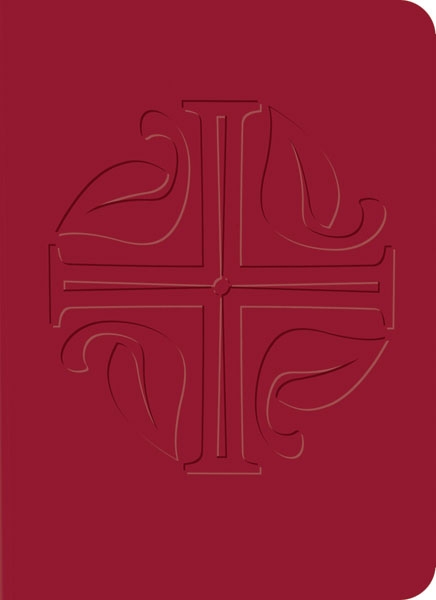
As Lutheran hymnals in America have done for over a century, our own Evangelical Lutheran Worship includes orders for Daily Prayer. If you don’t have an Evangelical Lutheran Worship at home, get one! Everyone should have one.
ELW has orders for Morning Prayer (Matins), Evening Prayer (Vespers), and Compline (Night Prayer). There’s also an order for Responsive Prayer (Suffrages) that can be used at any time of day and is perfect for those “in-between” times. The orders can all be used alone, in a small group (like a family), or in a congregational setting. Make use of those “may” instructions to tailor the office to your setting and needs. In the back of ELW you’ll find a daily lectionary, listing suggested Bible readings for every day in all three years of the lectionary cycle.
Using ELW, you could start with one office a day, and it doesn’t have to be the same one every day. If you really wanted to, you could work up to pray Morning Prayer when you wake up, Responsive Prayer at mid-morning, noon, and afternoon, Evening Prayer after dinner or at sunset, and Compline before you go to bed.
Remember, no one is obligated to pray the entire Daily Office–not even pastors, deacons, and bishops. So if you commit yourself to praying even just one office a day, and you miss it, don’t worry about it. The Daily Office exists as a gift from the church, not as a burden. You don’t need to “catch up” or pray makeup offices. It will take time to train yourself to regularly pray the Daily Office. Show yourself grace.
If the offices in ELW aren’t quite what you’re looking for, there are other Lutheran prayer books (also called breviaries) that provide even more structure.
Bread for the Day: Daily Bible Readings and Prayers
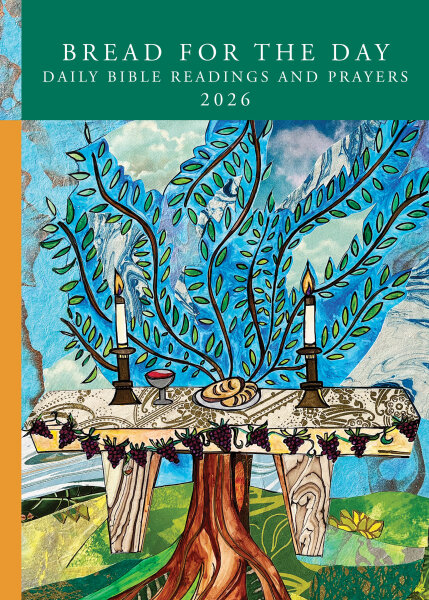
If you need a really basic place to start, Bread for the Day is a great resource. It’s great even if you don’t want to pray the Daily Hours, but it does include simplified orders for Morning and Evening Prayer perfect for someone just starting out.
The book is simple. For every day of the year, it provides a Bible reading (and prints some or all of it), a hymn suggestion, and a prayer. All you do is flip to the day’s page and read. There are also additional suggested readings, table prayers for each season, a place to write down prayer requests each month, some special rites for the home (Blessing the Home at Epiphany, Remembrance of the Saints for All Saints Day, etc.), other prayers, and a sentence or two about each person commemorated on our calendar.
I buy this book every year and use it extensively for worship planning and devotional use. I highly recommend it. It doesn’t get any easier than this.
For All the Saints: A Prayer Book for and by the Church
This four-volume set published is the most complete Lutheran daily office book I know. It includes the orders for Morning Prayer, Evening Prayer, and Compline; prayers for various occasions; all 150 psalms; and even Martin Luther’s Small Catechism.
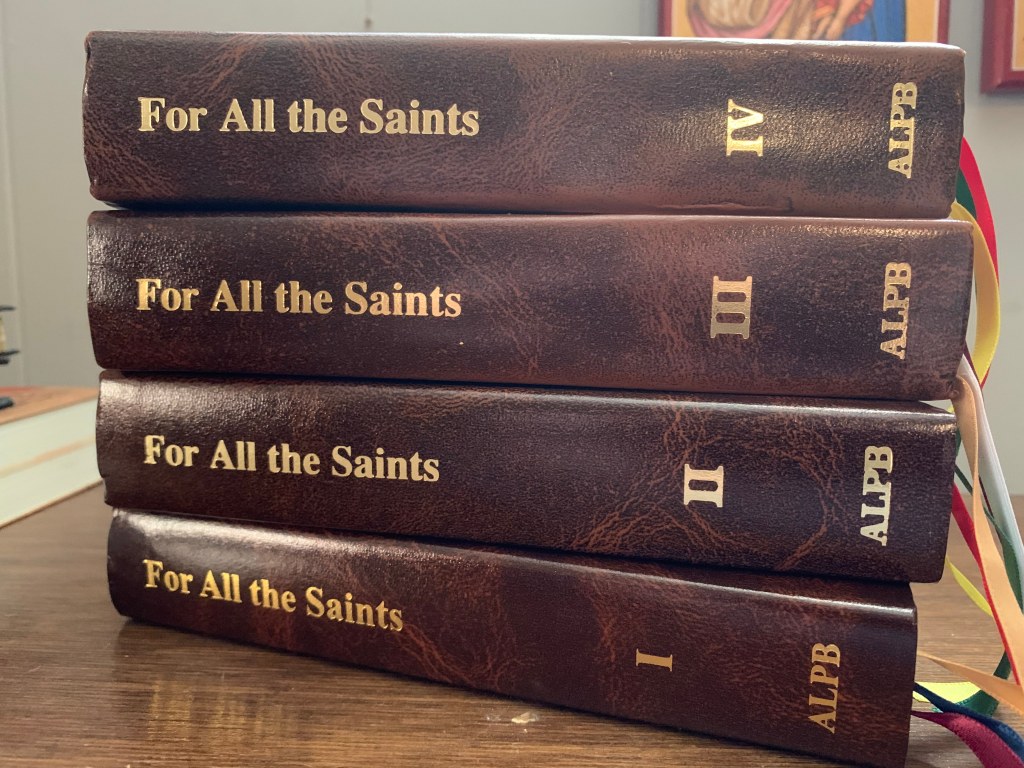
But why this set really shines, and why it’s four volumes, is that it also prints in full a reading from the Hebrew Scriptures, the Epistles, the Gospels, and a fourth source for every single day. This means you don’t have to use a separate Bible and list of readings. It’s all there in the book. If you want to use and carry just one book around for daily prayer, this is the best.
It does have some down sides. For All the Saints was published while the 1978 Lutheran Book of Worship was still the primary hymnal of the church, so some of the wording in the offices is slightly out-dated. There’s no music included–the offices and psalms are all spoken. And the readings are based on the old two-year lectionary included in LBW, so if you want your daily Bible readings to match the ones from the Revised Common Lectionary, this book won’t do. It’s also expensive: the whole set costs $150.
The Brotherhood Prayer Book
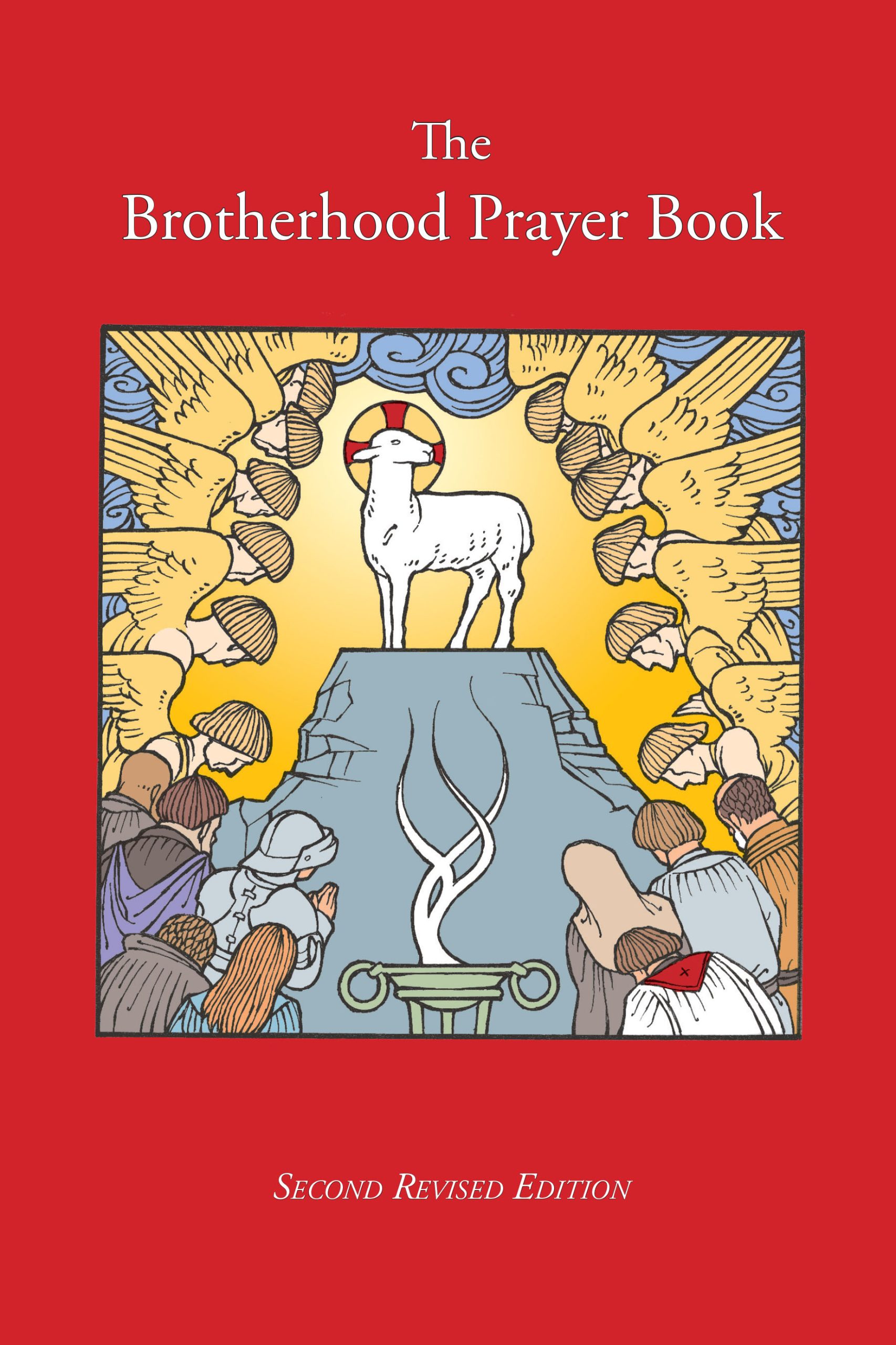
This book published by Emmanuel Press for the Lutheran Liturgical Prayer Brotherhood is based on the breviary of a similar German group. It embraces the monastic tradition of the Daily Office. It includes all of the traditional canonical hours: Vigils, Lauds, Prime, Terce, Sext, None, Vespers, and Compline; all 150 psalms with antiphons; responsories and canticles to sing; a list of psalms to be sung every day and readings to be read; prayers for every day, and more.
At first glance, this book looks difficult to use. For one, everything is in King James English, and the music is written in Gregorian chant! The book was also written to be used in a congregational setting with a whole host of leaders assigned to different roles; using it for private prayer means cutting through all that. And because the readings for each day aren’t printed, you still need a separate Bible. I’m also not a fan of the editors’ condescending attitudes in places.
Despite these flaws, I’m still drawn to this book. The liturgies themselves are easy to follow, and the book is compact enough–about the size of a hymnal–that it’s still easy to pick up and use.
If you’re looking for a deeper dive into the Daily Office and a more rigorous commitment, the BPB is an option.
Oremus: A Lutheran Breviary
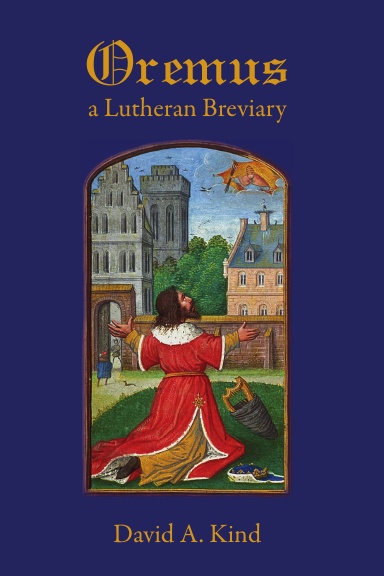
Published by David A. Kind, this one-volume breviary is similar to the above BPB. All of the canonical hours are present, as is the entire psalter, prayers, hymns, and readings for every day of the year.
Additionally, while Oremus doesn’t print out the Bible readings, it does provide a reading from another source for Matins every day, just like FAtS does. And unlike the BPB, it uses New King James english and modern music notation.
Oremus has the same other pros and cons that the BPB has. It’s also a thicker book with smaller type. Less expensive than FAtS but more than the BPB, it’s a good middle option–both in price, and between the insistence on archaisms in the BPB and the modern services of FAtS (and ELW).
Other Spiritual Practices
What if you don’t want to pray the Daily Office? It’s not for everyone, and that’s okay! There are all sorts of spiritual practices you can try. If you’re looking to add a new practice, or start one for the very first time, here are some suggestions:
Prayer Beads/Ropes
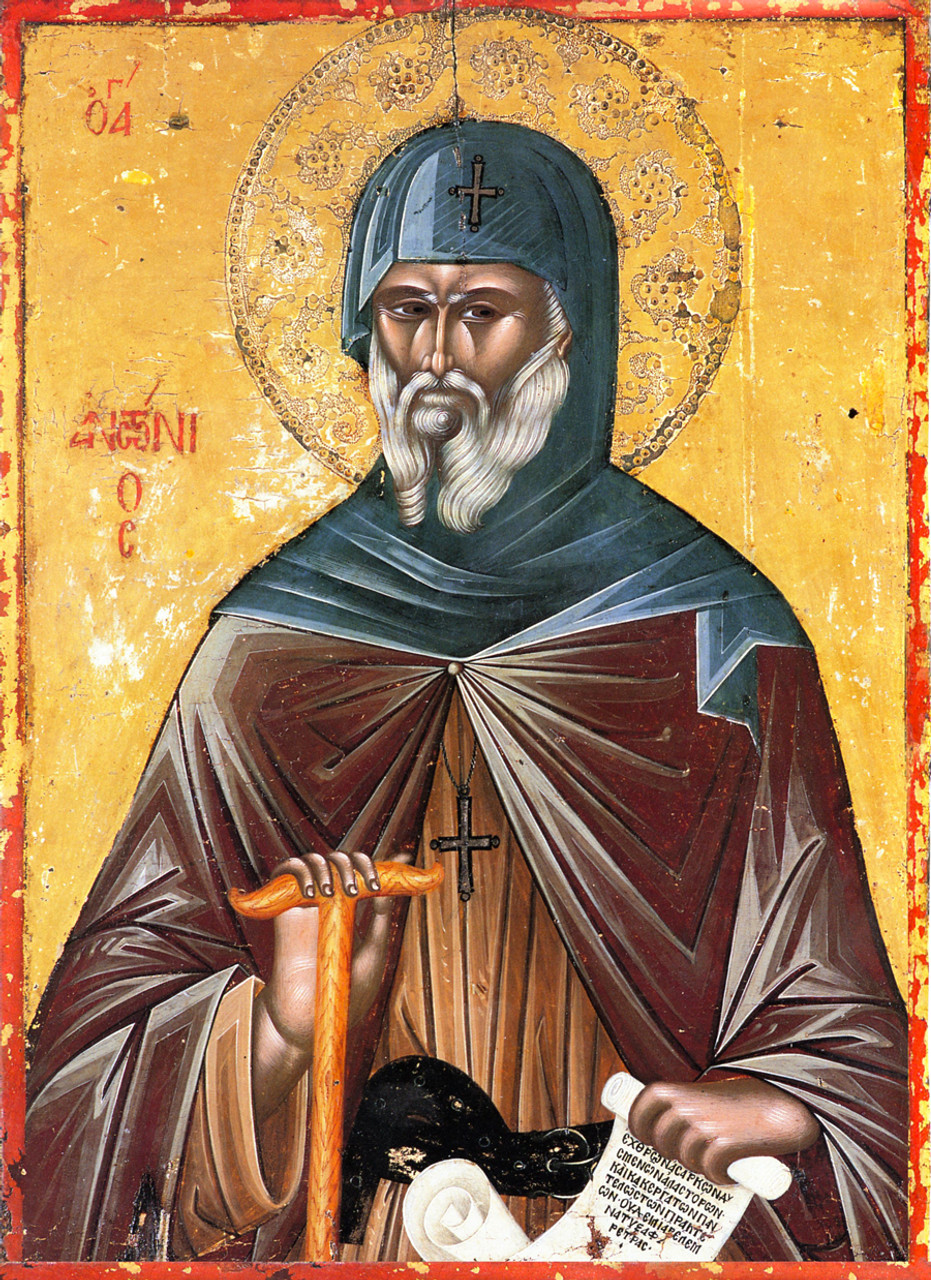
Way back when the monastics started getting serious about prayer, they used to recite all 150 Psalms every day. At first they kept track of where they were with pebbles kept in a pouch or basket that they would move when they finished a psalm. Finding this to be rather cumbersome, they got the idea to tie knots in a rope and use those to count instead.
Non-monastics who wanted to emulate the rigorous prayer life of the monastics, instead of reciting all 150 psalms, would instead recite the Lord’s Prayer or another prayer 150 times. Different cords of different numbers of knots for different prayers developed, and eventually, people started replacing the knots with beads.
The idea is to hold the rope/beads in one hand and use your other hand to hold a knot/bead while you say a prayer. Then you move to the next knot/bead and say the next prayer, continuing all the way around until you reach the end. Especially for repeating the same prayer many times, the knots/beads help you keep track of where you are, allowing you to focus on the prayer itself.
The most common example of prayer beads in Christianity is the Roman Catholic Rosary of 59 beads for praying the Lord’s Prayer, the Hail Mary, the Apostles’ Creed, and the Glory Be. Lutherans have sometimes used this Rosary, or adapted it.
I’ve researched and written about three of these “Lutheran Rosaries”. One was a 50-bead rosary created by the ELCA for Lent in 2003, with each bead assigned to a day in Lent with suggested prayer petitions. Another is what I call the “Longworth Rosary”, which is a modification of the 2003 Lent Rosary done by John and Sara Longworth for a seminary class in 2005 based on Martin Luther’s Small Catechism; this is the one I use. The last is perhaps the “original” Lutheran rosary, the Wreath of Christ, developed by Martin Lönnebo in Sweden, where it is still quite popular.
While prayer beads are very popular in Roman Catholicism and prayer ropes in Eastern Orthodoxy, Lutherans and other Protestants are beginning to understand why they are so popular and have been using them more and more frequently. They aren’t difficult to make and can be purchased from sellers online (yes, even the Lutheran ones!).
Bible Studies
Prayer isn’t the only practice Christians should cultivate. Biblical literacy is another one. We need to immerse ourselves in God’s word.
Some people can sit down, open the Bible, and start reading. For most of us, that’s a really daunting task. Bible Studies are a structured way we can enter into God’s word, reflect, and pray about it.
The best way to dive into the Bible is in a group. If you aren’t part of a group Bible study, join one! And if one isn’t being held at a time or place convenient for you, get a few folks together and start one!
If you prefer to do your Bible study at home, there are resources for that too. There are literally thousands of Bible studies out there. Some are good, others are… not so good. Here are some published by the ELCA to get you started:
Daily Faith Practices
This weekly study focuses on each Sunday’s second lesson and connects it to one of the five Gifts of Discleship that God gives us in our baptisms.
Daily Discipleship
This weekly study focuses on each Sunday’s gospel lesson.
Devotionals
A daily devotional is a popular spiritual practice for many Christians. Devotionals usually include a daily reading from the Bible, a story connecting that reading to daily life, and a short prayer. Devotionals only take a few minutes each day, perfect for those of us with busy lives.
Augsburg Fortress, the publisher for the ELCA, publishes a number of devotionals. Two popular ones are Christ in Our Home, which encourages people to live out their faith daily; and The Word in Season, which encourages reflections on the Sunday texts with meditations throughout the week.
The “Lenten Disciplines”
Every year on Ash Wednesday, we hear in the liturgy an invitation to the discipline of Lent: self-examination and repentance, prayer and fasting, sacrificial giving and works of love. But these practices aren’t just for the season of Lent. They are disciplines appropriate all year.
Self-examination and repentance

Did you know that Lutherans didn’t abolish private confession? Martin Luther encouraged it! While Lutherans never returned to the regular practice, it remains available, and there’s even an order for it in ELW.
This is a surprising suggestion for almost all Lutherans I know. But as your pastor, I want you to know that I am always available to hear confession and offer absolution. I have been called on for it in the past. The Constitutions and By-Laws of the Evangelical Lutheran Church in America bind me to confidentiality, and what you share with me will never be shared with anyone else–the only exceptions are 1) if you indicate that you are an immediate danger to yourself or to others, or 2) something involving harm to a child; in which cases, I must report and we will walk through the next steps toward healing and reparation together.
Prayer and Fasting
We’ve already talked about prayer extensively, so let’s talk about fasting.
It’s popular today during the season of Lent to “give something up”, or to fast from it. Sometimes people give up chocolate, or caffeine, or sweets, or something else.
But traditionally, fasting isn’t just giving something up. It’s either reducing how much one eats, or refraining from eating at all during the day, breaking the fast after sundown.
The roots of this tradition are in Christianity’s Jewish origin. To make a long story short, Christianity early on taught that it was proper to fast on Wednesdays and Fridays, and additionally to eat no meat on Fridays. During Lent, this was to be done every day except Sunday.
The purpose of fasting is to practice self-discipline, and to remember Christ’s betrayal (said to occur on Wednesday) and death (on Friday).
Now, having said all this, fasting can be a positive experience for people. But it can also be a dangerous one. Different people have different relationships with food, and it’s therefore inappropriate to claim that fasting is universally a healthy discipline. Someone who might wish to take on even a once-a-week fast will need to engage in some serious discernment around their body and what they hope to accomplish with the fast. I recommend having a conversation first before trying this discipline.
Sacrificial giving and Works of Love
The last of the traditional Lenten disciplines is what used to be called “alms-giving”. Alms are money or goods given to those who are poor. It’s one of the spiritual practices focused outward, on someone else.
Alms-giving is spiritual for two reasons: it directly helps a neighbor in need, and it forces us to alter our relationship with our money and material goods. They don’t exist for our enrichment–they are gifts from God, and they should be used to help others. As Jesus sacrificed his life for us, so we are to sacrifice what we have for others. We don’t give out of our excess–our giving should be a little bit painful.
Sacrificial giving can be practiced a number of ways: giving to the church, giving to aid organizations, giving directly to someone in need. If you want some suggestions, ELCA World Hunger, Lutheran Disaster Response, Lutheran Child and Family Services, and Lutheran World Relief are excellent organizations to give to, as is your friendly local congregation.
Lectio Divina
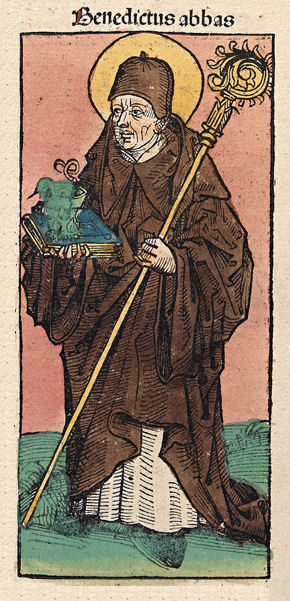
The last spiritual practice I’ll talk about is Lectio Divina (“Divine Reading”). This is a practice related to prayer and Bible study, but is actually a meditative practice.
Lectio Divina developed in monastic communities as a way of reading the Bible. The goal is not to study or analyze the passage. Instead, the goal is to meditate on it, to find in it the peace of Christ, and to reflect on it. Benedict of Nursia (d. 547) is credited with developing the form of Lectio Divina in use today.
There are four steps in Lectio Divina:
- READ a passage from the Bible. Read it slowly, in silence. Read it more than once.
- MEDITATE on what you read. Don’t search for meaning right away. Instead, listen for God in what you just read.
- PRAY to God, responding to what you heard and felt in your meditation.
- CONTEMPLATE what you heard. Rest in silence with God. Don’t think. Just be.
Final Thoughts
If you’ve made it this far, congratulations! Hopefully you found a new practice or two to try. Of course, this list isn’t anywhere near exhaustive. Christians have had two thousand years to develop and refine spiritual practices. You may find one elsewhere that speaks to you better than anything here does, and that’s okay! What’s important is that as Christians we never stop practicing our faith.

 Living an Ecumenical Life