10 Unusual Lessons I Learned in Seminary

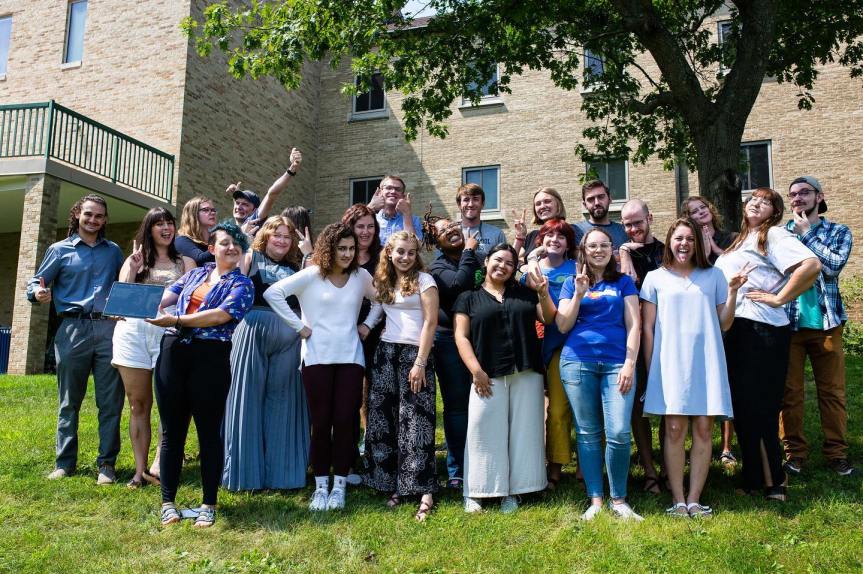
As the day of commencement approaches, I feel it is appropriate to take some time to reflect on the many lessons seminary teaches. You’d be surprised by what you learn living with people studying to be religious leaders.

  1. Everybody has vices. The first time my friend Sarah heard her fellow students curse, she joyfully exclaimed, “Thank God, I’m not the only one!” Seminarians curse, drink, smoke, spend entirely too much time on TVTropes.org, and engage in many of the same vices as everyone else. It’s what keeps us from falling into really bad habits.
  2. You need to stand up for yourself.  In one class, I had to stand up to a classmate who, in my opinion, was bullying another. In another, the class had to stand up to the professor when he refused to allow discussion on an important topic and who was not really teaching the class. There’s a good story from the early days when an entire class walked out and, for weeks, refused to enter the classroom in order to protest the treatment of one of their classmates. People need to stick up for each other.
  3. Good company solves most problems. I’m sure the copious amounts of wine and beer helped, but at the end of the day, it’s important to connect with the people who give you life. We would gather for food, for drink, around a fire, around worship, and around significant life events. None of us would have survived without the others.
  4. Disagreeing doesn’t mean we can’t be friends. Opinions and beliefs are fairly well set by the time you reach seminary, and tempers often flare. But that doesn’t mean that a person has no value or worth. Recognizing that our differences are not enough to separate us as human beings goes a long way towards fostering meaningful, vulnerable dialogue.
  5. Leggings are not pants. Even if you are doing a “liturgical dance” as part of a talent show. You know who you are.
  6. Shoes are completely optional. Seriously, who needs shoes? Kick them off and feel the cold, hard rock beneath your feet; the flat, but functional carpet; and, every once in a while, the cool, soft grass.
  7. Shirts, however, are NOT optional. Nobody wants to see that. Put it away, put it away! Insert religious “No shoes, no shirt, no service” joke here.
  8. Six liters of pop are more than enough to get you through an exegetical (or similar length) paper. It’s also enough to make you start to see things that aren’t there, like purple kangaroos, a monkey of barrels, or a passing grade.
  9. Be irreverent. Don’t be so damn serious all the time! The threat of lightning bolts from the sky enhances life, so go out there and make the most of it. Do you know how many jokes you can make about the church? I do: not enough. We bring it on ourselves, so we might as well accept it.
  10. Finally, and most importantly, it may not be interesting, but it’s true–especially if it’s written in Latin.
100_3788

Trinity Lutheran Seminary Calls New President

It’s official!

Today, the Trinity Lutheran Seminary Board of Directors voted to approve the nomination of Pastor Rick Barger as the new seminary president. This is an exciting time for the seminary as it looks forward in its mission to form new leaders for a changing church.

One word that the nominating committee used to describe its choice was “unconventional.” He didn’t fit the bill for many of the job prereqs, such as having led an academic department at a university. He was as shocked as anyone when he was asked for an interview and even more shocked when he found out he’d been recommended. Even so, the Board considered a wide variety of potential candidates, and as they narrowed down the list, it became clear that Pastor Barger had the “right stuff” to lead the seminary into a new way of thinking and being.

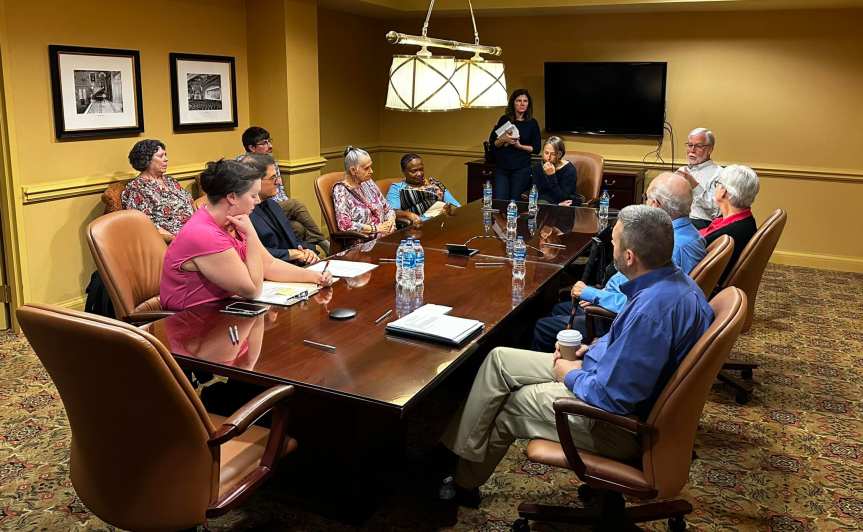
Meeting with Pastor Barger and some of my fellow classmates gave me the chance to get to know him better. He took student feedback and ideas very seriously, and the responses he gave to our questions revealed a keen insight into the future of the church, its leaders, and its presence in the world. I entered the conversation with concerns and left inspired, not because he waxed poetically or fired us up, but because he was sincere, honest, and encouraging.

Pastor Barger is best known for his work as a pastor–well, that and his book, A New and Right Spirit: Creating an Authentic Church in a Consumer Culture, which is required reading at the seminary. His leadership style is… different from what one expects from a seminary president, but his energy, passion, and dedication to serious missional theology and ecclesiology make him a unique choice to move the seminary forward.

I am excited to see where Pastor Barger will lead the seminary and how his approach to the church as mission will shape the way we form leaders for a changing church in a changing world.

Free Cultural Works

Mfalzon-freecontent_logo01--wikilogoFree-cultural-works-approvedOERlogoOrangeCCBYSA

Living an Ecumenical Life is, and always has been, proud to be available under the Creative Commons Attribution-ShareAlike 3.0 Unported License, which qualifies as a Free Culture License as explained in the Definition of Free Cultural Works (free, in this case, means freedom, not cost-free; although this blog is that kind of free, too!).

The license used on this blog allows the four basic freedoms of the Definition:

  1. The freedom to use and perform the work.
  2. The freedom to study the work and apply the information.
  3. The freedom to redistribute copies.
  4. The freedom to distribute derivative works.

And only applies these three permissible restrictions:

  1. It does not allow others to restrict access to the work.
  2. It requires attribution be given to the original author and that the original license notice be retained.
  3. It requires that derivative works be released under the same license.

If you run a blog, please consider licensing it using one of the free licenses that meet the Definition. WordPress highly encourages you to copyright and license your blog anyway for your own protection, so if you have not done so, Creative Commons offers simple licenses at absolutely no cost that can be created in seconds, two of which (Attribution and Attribution-ShareAlike) qualify as Free Licenses under the Definition of Free Cultural Works. Protect your work and show your support for the freedom of cultural works!

More Blogs (Again!)

I have been following these two blogs for some time now but never gave them their own introduction. Sorry, friends!

Inner Alchemy is the personal blog of Mary Anne, the woman who also brings you Curious Hawk Studios.

I am 25 years old and in the process of getting divorced, moving out of my home of three years AND transitioning to a new job. WHEW! Lots of changes! Things have been very chaotic the last few months, but despite that life has felt very… well to be blunt-boring, up until this point. For many years I have lived and acted in ways that I thought would make other people happy rather than be myself. I am tired of pretending to be someone I am not, and I am tired of being apathetic towards life. So I am taking the bull by the horns and this next year I am going to start creating the life I want. This, I have no doubt, will include many adventures (and misadventures) and I hope you will join me on my journey of self-transformation as I make my way through the next year with my new status as a single woman.

Joy, Junk, and Jesus is Jenny’s blog, and is where she shares her thoughts on struggles and God.

Youth ministry Professional. Optimist. Musician. Friend.

Life in a fish bowl can be hard sometimes. This is my space to jump out of the bowl and and share my times of joy, my struggles with the junk, and my encounters with Jesus.

I hope you’ll take the time to stop by and see what they have to offer.  And keep on writing!

EDIT: And a third! This one I just discovered, though it has been around for almost a month. Friends need to tell me when they start a blog!

The Fire Escape is a blog cowritten by two of my seminary classmates, David Kamphuis and Mike Hanck. They describe themselves as “two Lutherans attempting to add their theological voices to the sea of noise that is the internet.” The blog is just getting started, but I already like what I see.

Two Hymns

Sung this morning in Trinity Lutheran / Bexley Hall seminary worship:

O God of Every Nation – ELW 713

From search for wealth and power and scorn of truth and right,
from trust in bombs that shower destruction through the night,
from pride of race and station and blindness to your way,
deliver ev’ry nation, eternal God, we pray.

Text © 1958, ren. 1986 The Hymn Society, admin. Hope Publishing Company

This Is My Song – ELW 887

This is my song, O God of all the nations,
a song of peace for lands afar and mine.
This is my home, the country where my heart is;
here are my hopes, my dreams, my holy shrine;
but other hearts in other lands are beating
with hopes and dreams as true and high as mine.

My country’s skies are bluer than the ocean,
and sunlight beams on cloverleaf and pine.
But other lands have sunlight too, and clover,
and skies are ev’rywhere as blue as mine.
So hear my song, O God of all the nations,
a song of peace for their land and for mine.

Text sts. 1-2 © 1934, 1962, Lorenz Publishing Company


Authentic Worshipers

In my previous post I talked about the attitude of the people in worship being just as, if not more important, the worship itself. My friend David asked:

Any ideas on what helps promote authentic worshipers?

That’s a tough question, mostly because we never talk about it. I believe that the way we approach and treat worshipers heavily influences how we worship. Under the influence of the Church Growth movement, most mainline churches have jettisoned the idea of authentic worshipers altogether.  The churches strove for exactly the opposite–build a profile of the population in an area, then craft the product around the consumer and provide it.

Which brings me to idea number one: Worshipers are not consumers. If we treat them like consumers, they will act like consumers. Please visit NotAlwaysRight.com to find out why this is a very bad idea. Consumerism encourages demanding what you want as loudly as you have to in order to get it. Worship is never about what “we” want. Consumer worshipers are not authentic worshipers.

Worshipers are not spectators. The opposite of the above point, in this one, everything is about the leader(s). Unfortunately, most of our church building architecture encourages this thinking by separating the worshipers from the leaders and the table. If you have to put water stops and cheap motels in the aisle on the way to the Communion, it’s hard to view worshipers as anything but spectators watching the show that is, of course, brilliantly executed in your own not-so-humble opinion. Spectators are not authentic worshipers because they aren’t participating. Also, spectators can be nasty–everyone knows one of these types of fans, and I’m sure most people remember at least one of these incidents.

Worshipers need to be leaders, too. Whether this means training a healthy bunch of formal leaders–lectors, assisting ministers, ushers (who need to do more than collect the offering), intercessory pray-ers, Communion assistants, sacristans, greeters (who do more than say “Good morning!”), musicians, crucifers, acolytes, bread bakers, wine pressers, candle-makers (see how long this list can get?)–or intentionally inviting the worshipers to be active contributors to worship, it all comes down to community and shared responsibility. I love going to church (a good thing, considering, you know…), but if I’m stuck in a pew for one hour and fifteen minutes or longer, I better have something to do. It’s not about keeping my attention. With appropriate bathroom breaks, I have been known to sit through an entire marathon of the extended editions of the Lord of the Rings trilogy–that’s eleven hours and twenty-two minutes of epic movie experience.

It’s about making me feel like I have some stake in what goes on. Get me to share the peace. Invite me to bless my neighbor with the sign of the cross. Allow me to be communed by the person next to me and to commune the next person. Leave enough space in the prayers for me to feel comfortable adding my own, and let me know that’s okay. Let me actually touch the table, the bread, the wine cup, the baptismal water–not only is it meaningful, it’s fun. Engage me, make me a part of worship–engaged worshipers are authentic worshipers.

Children are authentic worshipers, too. I get depressed when I hear about the varieties of Children’s Church programs or Sunday School programs that remove children from the worship service, either in part or in whole. How are we ever going to pass our faith to our children if we don’t let them worship?

Children can be remarkably interested in what happens in worship–they want to be a part of it. One of my most tender memories from internship is from a Lenten service we held to pray for the world. We laid a big map of the world out on the chancel and invited the people to come forward, light a candle, and place it on a country, state, or city for which they wanted to pray. We invited the children up first, and I couldn’t believe how many came up and placed a candle–some on places I would never have guessed. Seeing a child holding a candle and looking at the map, confused, I asked if I could help her find what she was looking for. She looked at me and said, “I heard about Haiti, and I wanted to put a candle there, but I can’t find it.” I nearly cried as I helped her place her candle.

Then there were the Thursday evening services I held during the summer for people who could not come to church on the weekends for one reason or another. Each time, I created a different mode of active prayer. Each time, I invited the children up first to try it, and they came up every time, excited to find a new way to pray.

Who cares if they are noisy during the service? Who cares if they don’t sit still and pay attention during the children’s sermon (you don’t pay attention during the “adult” sermon either)? They are part of the faith, too, and need to be treated like they matter–they are even deserving of leadership. And they probably feel closer to the God we worship than we do. Children are authentic worshipers.

Most importantly, preach the Gospel. This goes as much for worshipers as it does for preachers. The Gospel is preached not only on Sunday morning by a person standing up front. It is preached in the way we worship, the way we treat each other, the way we welcome the stranger and, most importantly, in the way we live in the world outside of the church walls–which, unless you are crazy, is where you spend most of your time anyway. That means most of the time, you have to live out the Gospel in a way that doesn’t involve sitting down, listening to someone else talk, doing nothing. Worshipers who hear, preach, and live the Gospel are authentic worshipers. It’s up to us, all of us, to learn what that means.

Finally, and one we Lutherans tend to forget, let the Holy Spirit work. If we try to do it all ourselves, we won’t get very far. The Holy Spirit moves and breathes through the world–live and act like we believe it.

If you have other suggestions for what makes an authentic worshiper, please let me know in the comments below!

News! The new domain of Living an Ecumenical Life is now http://ecumenicallife.com. The old address, http://ecumenicallife.wordpress.com will still work and automatically redirect you to the new domain. Subscriptions will not be affected, so you have nothing to worry about–this is still a WordPress.com blog, and I don’t plan on changing that any time soon!

The Culture of Worship

“Uh oh, is today hipster worship?”
“I most certainly hope not…”

I’ve written before about my feelings on worship styles. Pastor Lou Florio made a good observation:

I have given up long ago (for similar reasons as you state) trying to define what is the best worship. Perhaps better the question is, “What is the best worship for the community and believer?” Just as we learn differently (“multiple intelligences”), I think varied worship helps varied people grow in communion with Christ and his church.

Different styles of worship engage worshipers in different ways. But what about worship attitudes? What does the culture of our worship say to people?

The reason I was asked if worship on a particular day was “hipster worship” had to do with attitude. We’ve all experienced this in some form or another: the leader is convinced that the “innovative” worship “experience” they’ve planned is simply the best thing since the 1970s, the worshiper is treated like a spectator in this amazing production, you’ve never heard of the music (because you aren’t a hipster, duh), and the leaders have crafted everything around themselves.

This attitude sucks. If this is what worship is like, I wouldn’t want to go. Yet it pops up everywhere.

Or how about this: worship is for the members who are already there. They come, they worship, the leave. They have “their” pews, this is “their” church, and they want things “their” way. The implication is explicit–not only is the community cut off from everyone else, the members are cut off from themselves.

What if worship encouraged intimacy and vulnerability not because of anything special in the worship, but because of what’s special in the worshipers. What if worshipers treated each other with respect and dignity while providing support for each other? My biggest argument against verbatim bulletins is that if the worshiping community actually offered to help new worshipers get acquainted with the service, you could print the bulletin in Klingon and still make it through the service (actually, that gives me an idea…).

In all the talk about worship techniques and styles, the attitude of the worshipers is often overlooked. Authentic, meaningful worship begins with authentic worshipers, not a great program. The church has always been about the people. If we as a community of believers struggle to be God’s mission in the world, maybe the first place we need to look is at ourselves and the culture we’ve created. Once we heal our attitudes, the rest will be remarkably simple.

DOMA and Christianity

Disclaimer: As the Supreme Court of the United States began hearing oral arguments in United States v. Windsor, I have tried to present and fair and balanced approach to the subject. I have done my best, but I apologize if my own opinion influences the arguments, specifically in regards to the citation of facts and numbers.

The Law

The federal Defense of Marriage Act was signed into law in 1996 during the Clinton administration. It’s a short act (the full text may be found here) that outlines two major laws:

§2 ”No State, territory, or possession of the United States, or Indian tribe, shall be required to give effect to any public act, record, or judicial proceeding of any other State, territory, possession, or tribe respecting a relationship between persons of the same sex that is treated as a marriage under the laws of such other State, territory, possession, or tribe, or a right or claim arising from such relationship.”

§3 ”In determining the meaning of any Act of Congress, or of any ruling, regulation, or interpretation of the various administrative bureaus and agencies of the United States, the word `marriage’ means only a legal union between one man and one woman as husband and wife, and the word `spouse’ refers only to a person of the opposite sex who is a husband or a wife.”

So DOMA says that no state is required to accept any other state’s marriage licenses if the license is for a same-sex marriage and that, for federal purposes, a marriage is defined as a union between a man and a woman.

The Obama administration believes that §3 is unconstitutional and does not defend it. It will, however, continue to enforce the law until the courts declare it unconstitutional or it is repealed.

The Case¹

In 2007, Edith Windsor and Thea Spayer, residents of New York state, were married in Toronto, Ontario. When Spayer died in 2009, New York recognized same-sex marriages performed in other places. The federal government did not, however, per DOMA, and Windsor was forced to pay $363,000 in estate taxes as if she and Spayer had not been married–if, like New York, the federal government had recognized their marriage, Windsor would have paid $0. Windsor’s case argues that §3 of DOMA, which for federal purposes defines marriage as a union between a man and a woman and thus excluded Windsor and Spayer, is unconstitutional.

The district court found §3 to be unconstitutional and ordered the estate tax to be refunded. The Justice Department, while agreeing with the decision, appealed the ruling as it is bound to enforce the law. The appellate court upheld the district court ruling, declaring Section 3 to be unconstitutional under the equal protection clause of the Fifth Amendment to the Constitution of the United States. The case has now gone to the Supreme Court, and oral arguments were heard late last month.

Christianity: Supporting DOMA §3

Arguments that argue for or against the constitutionality of DOMA §3 tend to come from different starting points. For Christians who support DOMA §3, the starting points are the family and nature. Human beings do not grow and live in isolation. Indeed, we literally cannot, as the care and protection of an adult is the only thing that keeps a baby human from starving to death. Throughout human history, the family unit has been vital to the continuation of the species and the construction of society. Humans will group family units to form larger units, but the importance of the small family unit cannot be overstated. Studies show that children that grow up in stable, loving families inherit stable, loving lives as a result of that upbringing.

Biologically, a male and a female are required for the human race to continue and to start a new family unit. God created human beings this way specifically and with purpose. Animals with defined and separated genders all reproduce this way. The physical evidence that males and females belong together is overwhelming in genetics and biology. This is what constitutes the family, and what has done so for thousands of years–marriage has always been between men and women.

The most often quoted argument supporting DOMA §3 comes from sacred books such as the Hebrew and Christian Bibles and Islam’s Qu’ran. Jewish Levitical law condemns homosexual practices, as do some of the Christian epistles. The Qu’ran condemns homosexuality based on the story of Lot in Sodom and Gomorrah². These texts are clear and unambiguous, unlike other texts, which could be interpreted in different ways. Therefore, same-sex marriage should not be allowed because, by its very nature, it ignores these condemnations.

Christianity: Opposing DOMA §3

Justice is the primary impetus for religious opposition to DOMA §3. According to the United States Government Accountability Office, there are 1138 statutory provisions, rights and responsibilities in which marital status is a factor. These include many monetary provisions, such as the ability to jointly file taxes and the ability to share insurance. But they also include the right to visit a spouse in the hospital, make funeral arrangements for a spouse, the right to inherit property, and joint-parenting rights. Because there are so many rights and responsibilities, and because they are so important, it is unjust to deny them to same-sex families. Christians use the writings of the prophets to support their case; the majority of the prophets proclaimed that God was more concerned with social injustices that people commit against each other than with correct ritual practices.

None of the sacred texts in the major faiths explicitly condone homosexual practices (the three Abrahamic faith books all condemn it, and the texts of Hinduism and Buddhism are much less clear), which presents an obstacle for religious people opposed to DOMA §3. Instead, they must rely on broader interpretations to make their case. Christians who support same-sex marriage interpret the prohibitions of the Bible to be cultural, not the explicit will of God. The God who created homosexual human beings and created the ability to love would not then deny those people the right to do so. The scriptural prohibitions are held in tension with the character of God as revealed in those same scriptures.

Counter-Arguments

Christians who support DOMA §3 argue that justice is not an issue because marriage as an institution is neither required nor forbidden by law–it is a free choice, and those who choose not to legally marry do not enjoy the rights and responsibilities associated with marriage no matter their sexual orientation. A single man is not entitled the benefits of marriage, either, because he has chosen not to be married.

A stable, unchanging definition of marriage is required. By changing the definition of marriage in this case, the door would now be open to change it in other ways, such as permitting polygyny (one husband, many wives), polyandry (one wife, many husbands), child marriage, or even the marriage of human beings with animals or objects.

Finally, Christians are bound by the moral and ethical will of God as presented in the Bible. A Christian is not free to pick and choose which of God’s laws must be followed.

Christians who oppose DOMA §3 argue that same-sex marriage does not undermine the family; rather, it provides for the same stable framework that has supported human society and the raising of children that traditional marriage does. The only difference is the gender of the two people involved in the marriage.

Traditional marriage, marriage between one man and one woman, is not the standard relationship for most of human history. For the majority of human history, polygny was the standard. Women were property, not people, in this model, and this view persisted until only the last few hundred years. This is also the prevalent model of marriage in the Old Testament.

Homosexual behavior can also be considered “natural” because it occurs in animals outside the human race. Most animals are not monogamous, and many engage in both homo- and hetero-sexual behavior. A behavior that occurs in nature cannot, then, be unnatural.

Finally, Christians have always set aside laws in the Bible when they are no longer needed. The majority of the Levitical and Holiness codes no longer apply, and not all of the New Testament views are still held today, such as Jesus’ condemnation of divorce.

Christians who support DOMA §3 rebut that other forms of marriage outside of one-man/one-woman marriage were never part of God’s plan according to the words of Jesus; monogamy was always God’s intention. A behavior that occurs in nature does not automatically mean that it is natural and permissible: carnivores kill animals, but that does not mean that murder is permissible. The laws that Christians have set aside are laws that Jesus fulfilled for Christians, so that they are no longer binding. Christians didn’t simply choose to ignore them.

My Take:

I stand with those opposed to DOMA §3 based on the arguments of justice and love. As a Lutheran, part of a tradition that emphasizes the word of God in the Bible, that means I have to hold in tension what I believe God is saying through those words with what some of the printed words actually are. I don’t try to explain away the few condemnations against homosexuality, just like I don’t try to explain away God’s Old Testament penchant for mass genocide. Instead, I have to rely on prayer and the Holy Spirit to guide the church to do what is right. I am moved by the words of the prophets and by the true and honest love I have witnessed between same-sex couples.

I also believe that marriage, being one of the duties of the states, should not be regulated by federal law. While I think DOMA §2 can be annoying (and I would be happy to see it go as well), it makes clear that the states have the final say in marriage. Federal law should not be explicitly Christian, either, so banning same-sex marriage on solely religious grounds is, I believe, inappropriate.I do not agree that allowing the state to perform same-sex marriage is persecuting the church. Nor do I agree that repealing DOMA will force churches to perform marriages that they do not believe are healthy. Marriage as a legal institution can be performed by ministers acting as representatives of the state, but is separate from the sacred blessing of the marriage. If that means separating the state institution into “civil union” and retaining the name “marriage” for the religious blessing, I am okay with that.

———-

¹http://www.scotusblog.com/case-files/cases/windsor-v-united-states-2/

²7:80-84